An innovative and challenging design approach
One of the fundamental principles of design is a deep and meaningful connection between form and content; form should reflect and shape the content. But nowadays, websites are all starting to look the same, and it is getting boring. Generic fonts, no layouts to speak of, interchangeable pages, and an absence of expressive visual language. Even designer websites are containerized in containers in containers and the final result are sites that are basically interchangeable. Tim Caynes had researched about and found thousand of creative studios with the same look and feel in their websites. Here is a compilation of his research.
Sam Goree has recently investigated if there were any truth to the notion that websites are starting to look the same, and he uses artificial inteligence in the study. Read the complete essay here
Fashion Industry
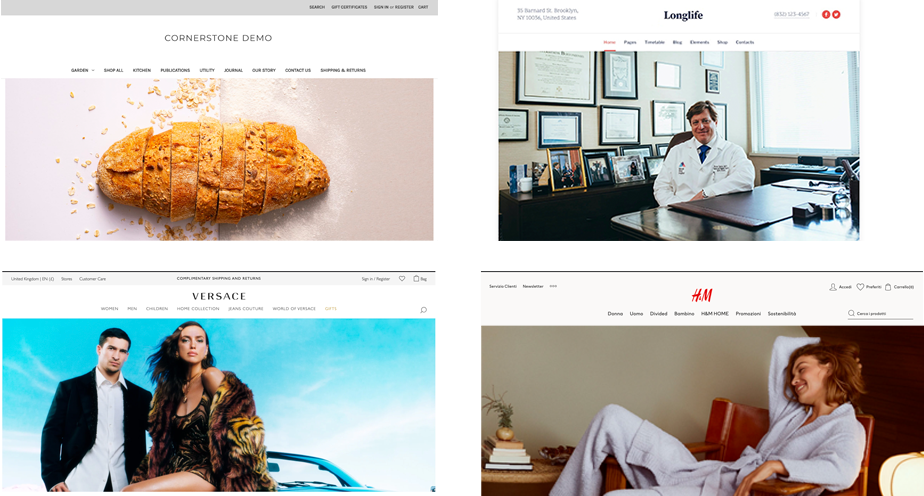
I analysed some of the most famous competitors, such as Zara, Uniqlo, Primark etc. Also I checked Gucci, Versace, Dolce&Gabbana etc and was expecting to find huge differences. Although all af them are diverse, have different profiles, prices, customers, qualities, styles, etc; I found their websites looking slightly the same. The only thing that change in between them is the photography. They also look the same than other industries websites or even templates.
Templates allow for fast publishing and combine technical reliability with streamlined workflows. They are very efficient and I do not criticize their usability. But visual design can do more than just ensure readability.
Inspiration
Jen Simmons saw the same problem. She says "because of inspiration overload and responsive design, we are surrounded by boxy, predictable websites". She then reminds us that
She turns to magazine layouts, where beautiful and experimental design brings the pages to life. Crazy text wraps, tilted text, text in the form of shapes, startling photography, huge headlines, text columns.
Starting minimal
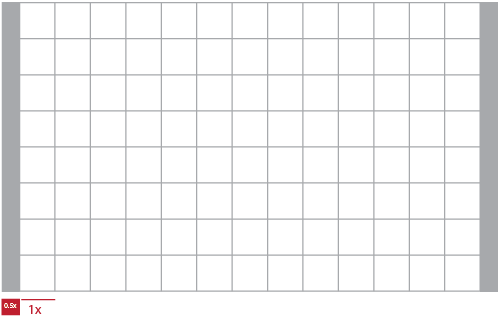
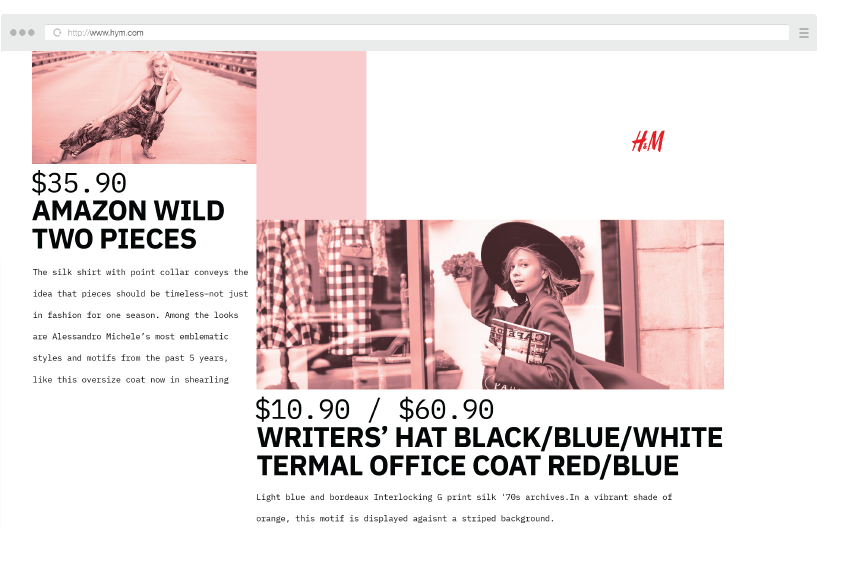
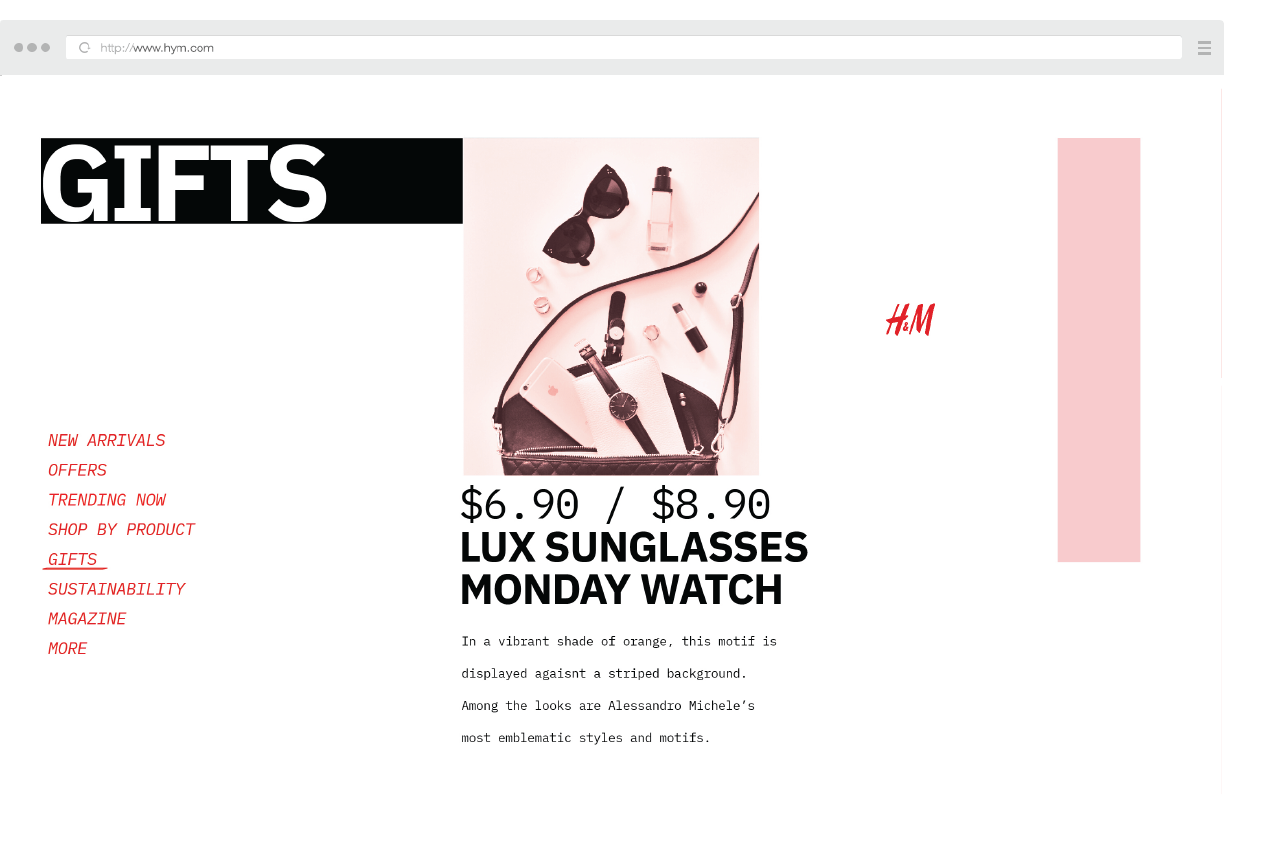
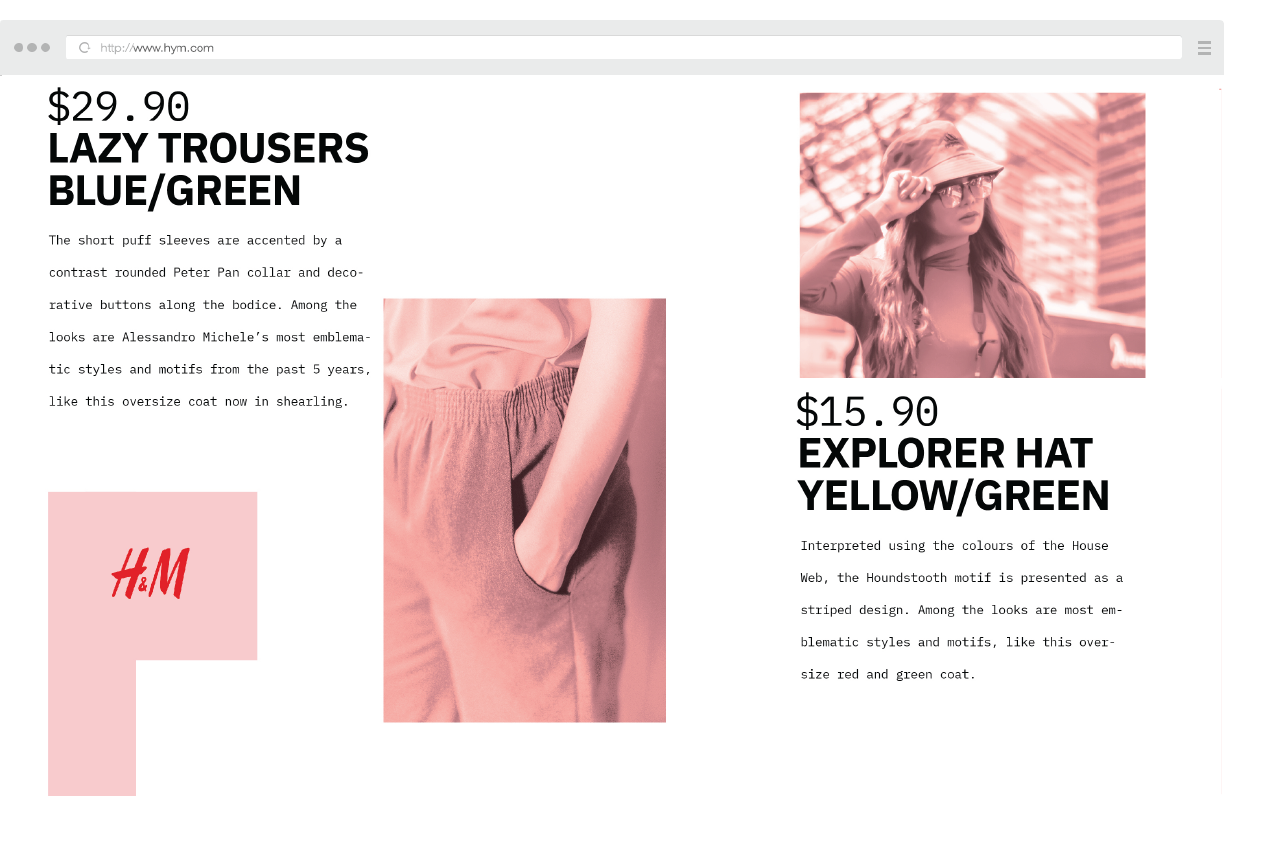
The main thing behind all those websites that are the same, is a grid that is just the same. So I thought that just by working hard on the grid would be enough to create a totally different approach. Following Jen Simmons thoughts, I took some fashion magazines as references and created a grid out of them.
ITERATE, ITERATE AND ITERATE
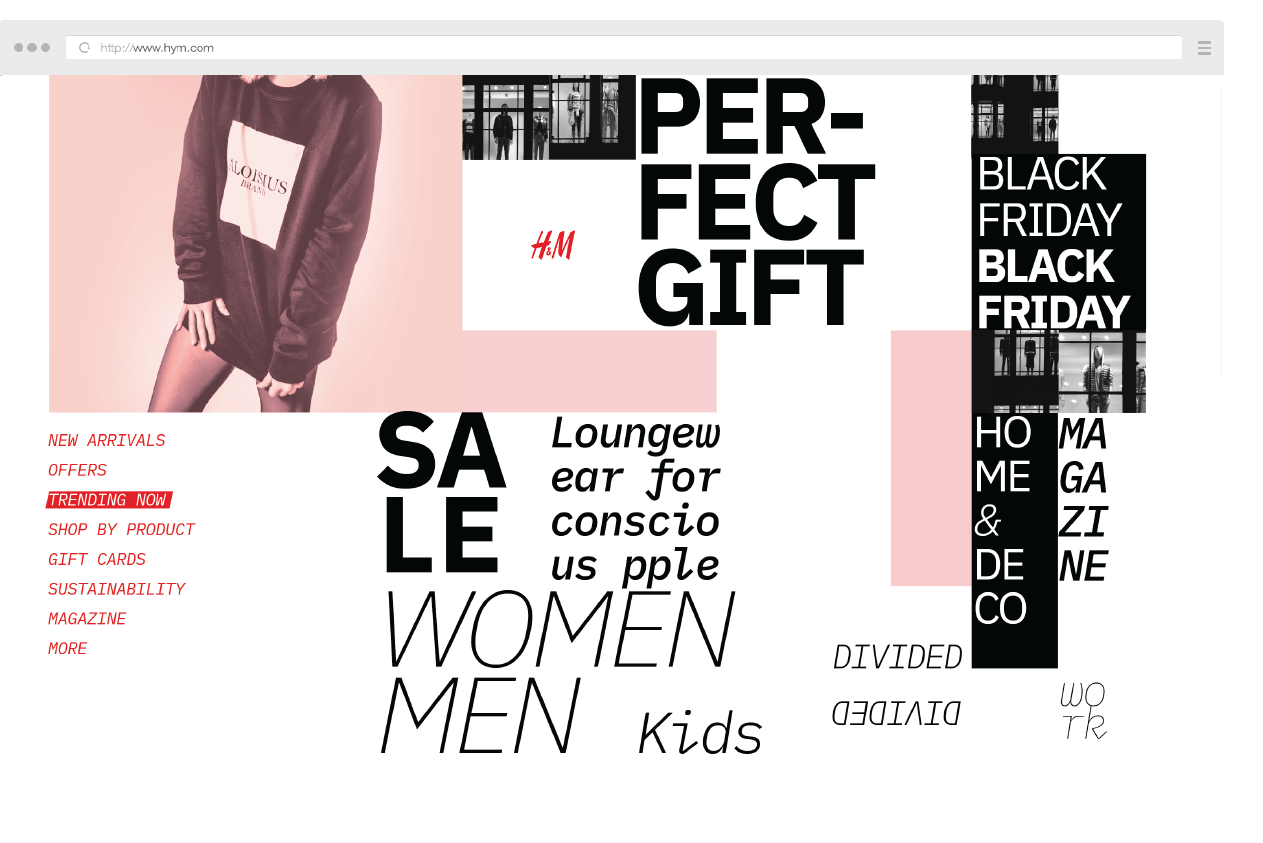
I wanted to treat the browser as a blank canvas to create an expressive visual experience. Using a different grid and trying to make it as visible as possible was my choice to create a totally different and impressive look and feel. After many iterations this was the final result:

Conclusion
We need creativity and usability in order to make real progress in the world of design and technology. Luckily, today's web technologies have enormous design capabilities. We have the ability to implement almost every conceivable idea and design. We can create radical, surprising and suggestive websites. We can combine experimental typography with generative images and interactive experiences. Now it is possible to challenge the internet’s visual conformity and there are many applications — especially in culture, music and the arts — where visual design can do more than just ensure readability. In these cases, instead of asking how to meet the demands of the template, designers and developers should ask themselves how they can create templates that meet the demands of the design. This is one of the reasons why I believe that designers should be able to code for themselves. If you want to push the boundaries, you have to understand the limitations.
This challenge was a workshop done by Lady's That UX Buenos Aires.